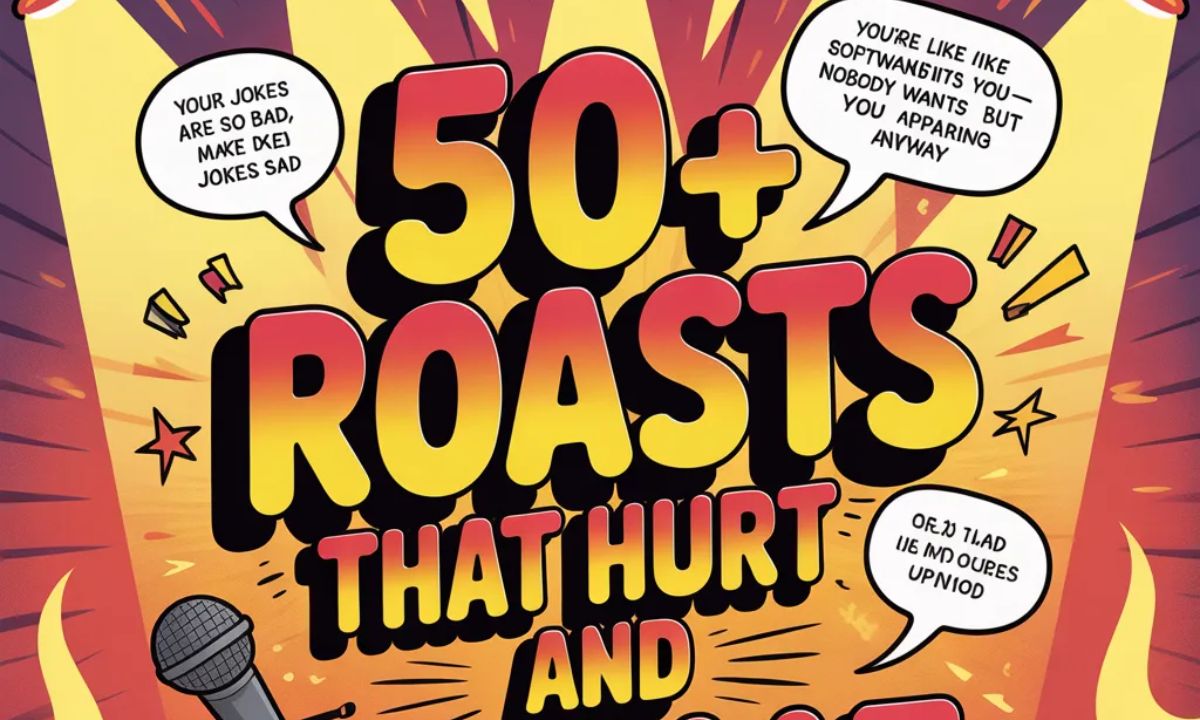
Roasting is an art. When done right, it can be funny, clever, and memorable. But the best roasts are not just mean—they are smart, rhyming, and creative. Roasts that hurt and rhyme use sound patterns to make words more powerful. The rhyme makes the roast stick in the listener’s mind, while the humor keeps it entertaining.
This guide explains how rhyming roasts work, why they sound sharper, and how to create your own using language skills—not bad behavior.
What Are Roasts That Hurt and Rhyme?
A roast is a humorous insult meant to tease someone in a playful or witty way. A rhyming roast uses similar ending sounds to make the insult sound smoother and more dramatic.
Example (light roast): “You talk so slow, even time says no.”
The rhyme makes the sentence catchy, while the words deliver the punch.
50 Roasts That Hurt and Rhyme
- You talk real fast, but think in the past.
- You aim so high, yet barely try.
- You act so wise, but miss the signs.
- You chase the trend, but never end.
- You speak with pride, but logic hides.
- You shine online, but fail offline.
- You plan a lot, but move you do not.
- You claim you lead, but never read.
- You love the fame, but lack the game.
- You flex all day, but fall halfway.
- You try to glow, but move too slow.
- You talk so loud, yet sound confused and proud.
- You want the crown, but let it down.
- You post for clout, but think in drought.
- You speak in fire, but act in tire.
- You chase success, but rest is best.
- You want respect, but can’t connect.
- You run your mouth, but lose the route.
- You fake a grin, but truth caves in.
- You seek the prize, but skip the grind.
- You try to roast, but burn yourself most.
- You talk so slick, yet think so thick.
- You aim for fame, but stay the same.
- You bring the show, but lack the flow.
- You claim you’re rare, but blend in there.
- You speak in haste, but waste good taste.
- You want the win, but quit within.
- You post your might, but hide from fight.
- You love to brag, but skills still lag.
- You dream out loud, but effort’s cloud.
- You wear the smile, but quit the mile.
- You talk so bold, but fold when told.
- You chase the spark, but miss the mark.
- You want applause, but skip the cause.
- You shine for show, but depth is low.
- You talk in code, but crack the load.
- You want the top, but stop and stop.
- You flex your tone, but stand alone.
- You sell the view, but facts are few.
- You want respect, but dodge reflect.
- You talk real neat, but can’t compete.
- You claim you’re fast, but stuck in last.
- You want the role, but lack the soul.
- You act so keen, but miss the mean.
- You speak with flair, but go nowhere.
- You love the praise, but hate the phase.
- You chase the light, but fear the night.
- You talk all day, but say no way.
- You try to lead, but won’t concede.
- You want to rise, but fear the tries.
Why Do Rhyming Roasts Sound More Powerful?
Rhymes are easy to remember and pleasing to the ear. That’s why they are used in poems, songs, and jokes.
Language reasons rhyming roasts work:
- Rhythm improves impact – the words flow better
- Memory effect – people remember rhymes longer
- Sound emphasis – the insult feels sharper
- Confidence in delivery – rhymes sound intentional, not accidental
In short, rhyme turns simple words into a stronger message.
Grammar Tips for Creating Rhyming Roasts
If you want your roast to sound smart and correct, grammar matters.
1. Use Parallel Sentence Structure
Keep the same grammar pattern on both sides of the rhyme.
Example: “You chase fake fame, but stay the same.”
2. Choose Strong Verbs
Strong verbs make roasts more effective.
Weak: “You are kind of slow” Strong: “You drag like lag”
3. Keep It Short
Short sentences hit harder than long ones.
Good roast structure:
- One line
- One rhyme
- One clear idea
Clean and Clever Rhyming Roast Examples
These are language-based, not offensive, and safe for learning purposes.
- “Your ideas stall, mine stand tall.”
- “You aim for gold but fold when told.”
- “You speak with pride, but facts hide.”
- “You try to shine, but miss the line.”
These roasts focus on wordplay, not personal attacks.
How to Make Roasts Hurt Without Being Rude
Smart roasts hurt because they are true, not because they are cruel.
Focus on:
- Habits (not appearance)
- Actions (not identity)
- Humor (not hate)
Bad roast: personal and mean Good roast: clever and thoughtful
Example: “You argue loud but think in cloud.” This targets behavior, not the person.
Common Rhyming Patterns You Can Use
Here are simple rhyme patterns for beginners:
- Same word family: talk / walk
- Opposites: rise / fall
- Action rhymes: play / delay
- Descriptive rhymes: bright / light
Practicing these improves both vocabulary and creative writing skills.
Mistakes to Avoid When Writing Rhyming Roasts
- ❌ Forcing a rhyme that sounds unnatural
- ❌ Using slang that breaks grammar rules
- ❌ Making it too long
- ❌ Being offensive instead of funny
Remember: a smart roast sounds effortless.
Why Learning Rhyming Roasts Improves English Skills
Writing roasts that hurt and rhyme helps learners:
- Improve vocabulary
- Understand sentence rhythm
- Practice pronunciation
- Develop creative thinking
It’s a fun way to learn advanced language control without boring grammar drills.
Final Thoughts
Roasts that hurt and rhyme are not about being mean—they are about being clever. When you use correct grammar, strong vocabulary, and clean humor, your words become sharp without being harmful.
Master the rhyme. Respect the language. And let your words do the work.