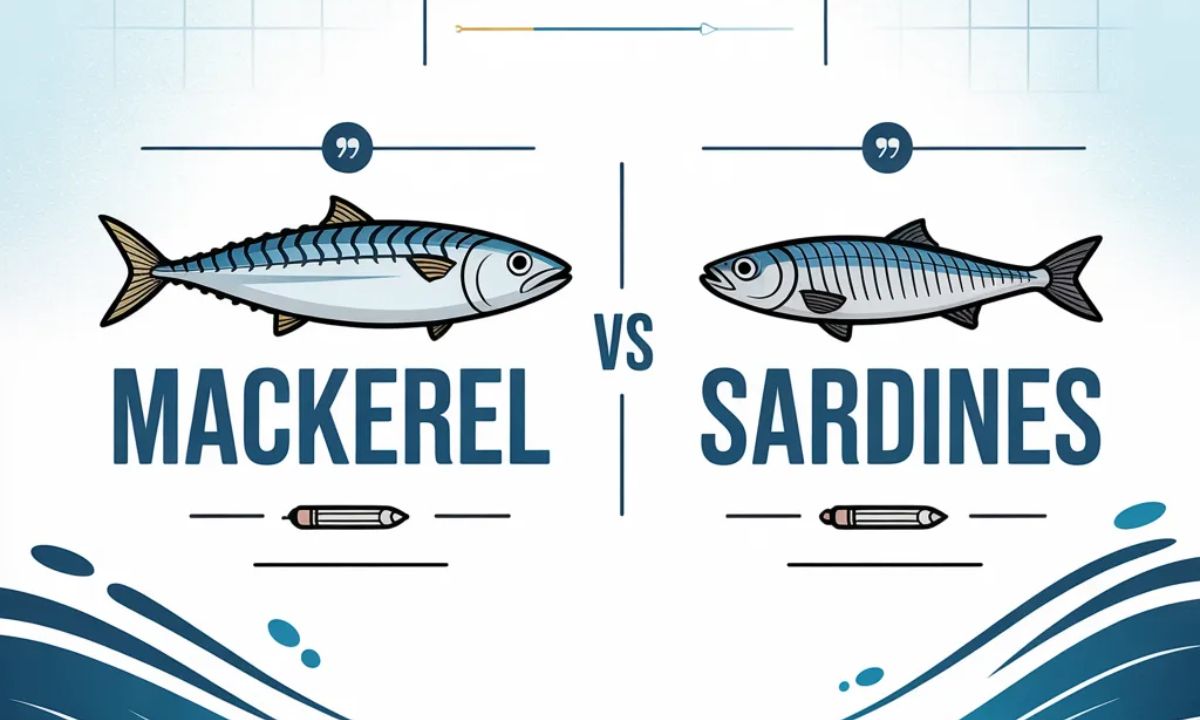
When it comes to healthy seafood choices, the debate of Mackerel vs Sardines is one of the most searched topics worldwide. Both fish are packed with nutrients, rich in omega-3 fatty acids, and affordable compared to other seafood options. However, they are not the same, and choosing between them depends on nutrition, taste, safety, and health goals.
In this detailed guide, we will break down everything about Mackerel vs Sardines, including nutrition facts, health benefits, mercury levels, taste differences, sustainability, and cooking ideas.
Let’s dive in.
What is Mackerel?
Mackerel is a type of oily, saltwater fish found in both temperate and tropical oceans. It belongs to several species, such as Atlantic mackerel and king mackerel. This fish is known for its strong flavor, high fat content, and rich nutritional profile.
Mackerel is commonly eaten grilled, smoked, baked, or fried. Because it is rich in omega-3 fatty acids, it is widely considered a heart-healthy fish. However, some larger species (like king mackerel) may contain higher levels of mercury, so choosing smaller varieties is often recommended.
Key features of mackerel:
- Oily fish with strong taste
- High in omega-3 fatty acids
- Rich in protein, vitamin D, and B12
- Firm, meaty texture
- Often eaten fresh or smoked
What are Sardines?
Sardines are small, oily fish that usually live in large schools in the ocean. They are commonly found in the Atlantic, Pacific, and Mediterranean seas. Sardines are widely consumed in canned form, although they can also be eaten fresh.
They have a mild, slightly salty taste and are known for being one of the most affordable and nutritious fish available. Sardines are especially rich in calcium (when eaten with bones), omega-3 fatty acids, and vitamin D.
Key features of sardines:
- Small, oily fish
- Mild flavor compared to mackerel
- Very high in calcium and omega-3
- Often eaten canned (in oil, water, or sauce)
- Low mercury content
Mackerel vs Sardines – Comparison Table
| Feature | Mackerel | Sardines |
| Size | Medium to large fish | Small fish |
| Taste | Strong, rich, oily flavor | Mild, slightly salty flavor |
| Texture | Firm and meaty | Soft and tender |
| Omega-3 Content | Very high | High |
| Protein | High | High |
| Calcium | Moderate | Very high (with bones) |
| Mercury Level | Moderate (depends on species) | Very low |
| Calories | Higher | Lower |
| Common Form | Fresh, smoked, grilled | Mostly canned or fresh |
| Price | Moderate | More affordable |
| Sustainability | Varies by species | Generally more sustainable |
What is Mackerel vs Sardines?
To understand Mackerel vs Sardines, we first need to know what each fish actually is.
Mackerel is a fast-swimming, oily fish found in both temperate and tropical waters. It has a strong flavor and is known for its high fat content and rich texture.
Sardines, on the other hand, are small, oily fish usually found in large schools in the ocean. They are milder in taste and are often canned for convenience.
When comparing Mackerel vs Sardines, both belong to the oily fish category, meaning they are rich in healthy fats. However, their size, taste, and nutritional composition differ slightly.
Nutritional Comparison of Mackerel vs Sardines
Nutrition is the biggest reason people search for Mackerel vs Sardines.
Both fish are nutrient-dense, but here is how they compare:
Mackerel (per 100g):
- High in protein
- Rich in omega-3 fatty acids
- High vitamin B12 content
- Good source of vitamin D
- Higher fat content
Sardines (per 100g):
- Very high calcium (especially with bones)
- Rich protein source
- High omega-3 fatty acids
- Contains vitamin D and B12
- Lower fat than mackerel
In the Mackerel vs Sardines comparison, sardines slightly win in calcium content, while mackerel has a richer fat and calorie profile.
Both are excellent for a balanced diet, especially for heart and brain health.
Omega-3 Fatty Acids in Mackerel vs Sardines
Omega-3 is one of the biggest reasons people compare Mackerel vs Sardines.
Omega-3 fatty acids help:
- Reduce inflammation
- Improve brain function
- Support heart health
- Lower cholesterol levels
In the debate of Mackerel vs Sardines, mackerel generally contains slightly higher levels of omega-3 fats, making it extremely beneficial for people who need extra cardiovascular support.
However, sardines still provide a strong omega-3 dose and are often considered more balanced due to lower mercury risk.
So, in Mackerel vs Sardines, both are excellent omega-3 sources, with mackerel having a slight edge.
Taste and Texture Differences
Taste plays a huge role in choosing between Mackerel vs Sardines.
Mackerel:
- Strong, rich, and oily flavor
- Firm and meaty texture
- Often grilled or smoked
Sardines:
- Mild, slightly salty flavor
- Soft texture
- Commonly canned in oil, tomato sauce, or water
In Mackerel vs Sardines, sardines are often preferred by beginners due to their milder taste. Mackerel is more intense and better suited for people who enjoy bold seafood flavors.
So, if taste matters most in your Mackerel vs Sardines decision, sardines are usually easier to enjoy.
Mercury Levels and Safety in Mackerel vs Sardines
Safety is an important part of the Mackerel vs Sardines comparison.
Large fish tend to accumulate more mercury over time. This is where differences appear.
Mackerel:
- Some species (like king mackerel) are high in mercury
- Atlantic mackerel is safer and commonly consumed
Sardines:
- Very low mercury levels
- Considered one of the safest fish to eat regularly
In the Mackerel vs Sardines debate, sardines clearly win in terms of safety due to consistently low mercury levels.
For pregnant women, children, or people eating fish regularly, sardines are often recommended over certain types of mackerel.
Sustainability and Environmental Impact
Another important factor in Mackerel vs Sardines is sustainability.
Sardines:
- Reproduce quickly
- Less pressure on fish populations
- More sustainable choice globally
Mackerel:
- Some stocks are well-managed
- Others face overfishing concerns depending on region
In the Mackerel vs Sardines comparison, sardines are generally considered the more environmentally friendly option.
If sustainability is important to you, sardines are often the better pick in Mackerel vs Sardines.
Price and Availability
Cost is another key factor in Mackerel vs Sardines.
Mackerel:
- Slightly more expensive in fresh form
- Available fresh or frozen depending on region
Sardines:
- Very affordable
- Widely available canned in supermarkets
- Long shelf life
In most cases, Mackerel vs Sardines shows sardines as the budget-friendly option, making them ideal for daily consumption.
Mackerel is still affordable but usually costs more than sardines.
Best Cooking Methods for Mackerel vs Sardines
Cooking style also influences the Mackerel vs Sardines choice.
Mackerel cooking methods:
- Grilling with spices
- Smoking
- Baking with lemon and herbs
- Pan-frying
Sardines cooking methods:
- Grilled fresh sardines
- Toast topping (canned sardines)
- Added to salads or pasta
- Light frying or sautéing
In Mackerel vs Sardines, mackerel is more versatile for hot meals, while sardines are quick and convenient for fast nutrition.
FAQs on Mackerel vs Sardines
1. Which is healthier, Mackerel vs Sardines?
Both are healthy, but sardines are lower in mercury, while mackerel has slightly more omega-3 fats.
2. Can I eat Mackerel vs Sardines daily?
Yes, but sardines are safer for frequent consumption due to low mercury levels.
3. Which is better for weight loss: Mackerel vs Sardines?
Sardines are slightly better for weight loss due to lower fat content and calories.
4. Is canned sardines as healthy as fresh mackerel?
Yes, canned sardines retain most nutrients and are very healthy compared to fresh fish.
5. Why is Mackerel vs Sardines comparison so popular?
Because both are affordable, nutrient-rich fish often recommended for heart health and brain function.
6. Which tastes better in Mackerel vs Sardines?
It depends on preference—sardines are milder, mackerel is stronger and richer.
Conclusion:
When it comes to Mackerel vs Sardines, there is no absolute winner because both fish are extremely healthy and beneficial.
If you want:
- Higher omega-3 → choose mackerel
- Lower mercury and safer daily intake → choose sardines
- Budget-friendly option → choose sardines
- Strong flavor and richer texture → choose mackerel
In the end, the best choice in Mackerel vs Sardines depends on your health goals, taste preference, and lifestyle.
A balanced diet can even include both fish, giving you the full range of nutrients they offer.