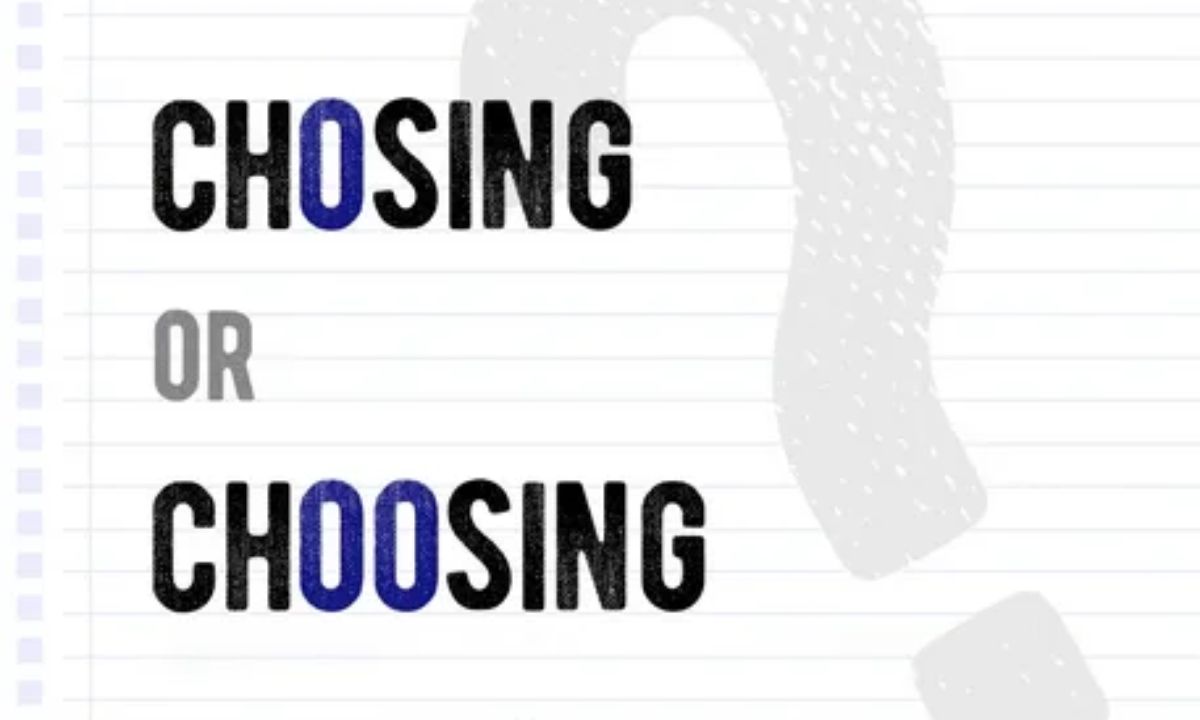
When it comes to writing, many people are confused between “chosing” and “choosing.” The correct form is “choosing,” which is the present participle of the verb “choose.” Many people make the mistake of writing “chosing” because it looks similar, but this is incorrect in English grammar.
Using the wrong form can make your writing look unprofessional. In this article, we will explain the difference between these two forms, why choosing is correct, and how to use it correctly in sentences.
Chosing or Choosing Which Form of the Verb Is Correct?
The correct form is “choosing.” This is because English verbs follow specific patterns when forming their continuous forms. The verb “choose” changes to “choosing” in the present continuous tense.
Writing “chosing” is a common typo, but it is not recognized as correct in English. Whether you are writing an essay, email, or social media post, always use choosing. Remember, the “-ing” ending is added to the base verb “choose” to indicate ongoing action or selection.
Is it Chose or Choose?
“Choose” and “chose” are related forms of the same verb but are used differently. Choose is the present tense, used when someone is making a decision now or in general. For example: “I choose to eat healthy food.”
Chose is the past tense, used when the action has already happened. For example: “Yesterday, I chose a red shirt.” Many people confuse the two, but remembering their time context—present or past—makes it easy. Always use choose for present or future actions and chose for actions that happened in the past.
Why is it Chose and Not Choosed?
Many learners ask, “Why not choosed?” English verbs have irregular forms, and choose is one of them. Unlike regular verbs, which add -ed for past tense (like walk → walked), irregular verbs change completely.
So, choose → chose in the past tense. Writing choosed is a common mistake but is incorrect. For example: “I chose my outfit yesterday,” not “I choosed my outfit yesterday.” Memorizing irregular verbs helps avoid this error. Using chose correctly ensures your sentences are grammatically correct and professional.
When to Use Choose
Choose is used in the present tense when someone is deciding or picking something now or in general. For example:
- “I choose tea over coffee.”
- “She always chooses the best option.”
It is also used to give advice or make suggestions: “You should choose wisely.” Choose works for both singular and plural subjects in the present tense. It indicates the act of decision-making at the moment or habitually. Always remember, if the action is happening now, use choose, not chose or choosed.
Chosing or choosing
The correct spelling is choosing, not chosing. When forming the -ing form of verbs ending in -e, English rules say we drop the e and add -ing. So, choose → choosing. Using chosing is a spelling mistake.
Choosing shows ongoing action, for example: “I am choosing my favorite book.” Always remember this rule for all verbs ending with -e, such as make → making, write → writing, dance → dancing. Correct spelling ensures your writing is clear and professional.
When to Use Chose
Chose is the past tense of choose. Use it when the decision or selection happened in the past. For example:
- “I chose a blue dress yesterday.”
- “He chose to study law last year.”
Chose cannot be used for present or future actions. If you want to talk about an ongoing choice, use choosing. Remembering that chose = past helps you avoid mistakes like writing choose in past-tense sentences.
When to Use Chosen
Chosen is the past participle form of choose. It is used with helping verbs like have, has, or had. For example:
- “I have chosen the best candidate.”
- “She had chosen a red car before the blue one arrived.”
Chosen is also used in passive sentences: “The team was chosen carefully.” Use chosen when the action relates to the past but is linked to another verb. It is never used alone without helping verbs.
When to Use Choosing
Choosing is the present participle of choose. It shows ongoing or continuous action. For example:
- “I am choosing my outfit for today.”
- “They are choosing a movie to watch.”
It can also be used as a gerund, acting like a noun: “Choosing a good career is important.” Use choosing when describing current decisions or actions in progress. Always avoid writing chosing, as it is incorrect.
Choose in a Sentence
Here are examples of choose in a sentence:
- “I choose healthy food every day.”
- “You can choose any color you like.”
- “She always chooses the fastest route to work.”
Remember, choose is for present tense and ongoing decisions. Using it correctly makes your writing clear and professional.
Chose in a Sentence
Here are examples of chose in a sentence:
- “I chose a red shirt yesterday.”
- “He chose to attend the meeting last week.”
- “They chose the hotel carefully before booking.”
Remember, chose is past tense, used when the decision has already happened. Using chose correctly ensures your sentences make sense in the past context.
Chosing or Choosing Why Not Chosing?
Many learners ask, “Why not chosing?” The answer lies in spelling rules. In English, when a verb ends with “-e,” we drop the “e” and add “-ing” to form the continuous tense. So, choose → choosing.
Writing chosing ignores this rule, making it grammatically wrong. Always check your spelling to avoid this mistake. Using choosing correctly ensures clarity and professionalism in writing. Misusing chosing may confuse readers and make your text appear incorrect.
Understanding Choosing and Chosing
Choosing is the present participle of the verb “choose,” while chosing is a common spelling mistake. Understanding the difference is simple: choosing shows an action happening now or a decision-making process.
Chosing does not exist in standard English. For example, “I am choosing my outfit for the party” is correct. Avoid writing chosing in any formal or informal text. Once you understand the rule of dropping “e” and adding “-ing,” you can confidently use choosing in your writing.
The Grammar Foundation
The grammar rule is straightforward: for most verbs ending in -e, drop the -e and add -ing. This is why choose → choosing. The rule applies to many verbs like make → making, write → writing, dance → dancing.
English learners often forget this rule, leading to mistakes like chosing. By following the grammar foundation, you can avoid common errors and improve your writing. Proper grammar ensures your sentences are clear, correct, and easy to read.
Synonyms of Choosing
Here are 20 words you can use instead of choosing depending on the context:
- Selecting
- Picking
- Opting
- Deciding
- Electing
- Preferring
- Appointing
- Designating
- Nominating
- Adopting
- Determining
- Settling on
- Taking
- Accepting
- Assigning
- Voting for
- Single out
- Choosing from
- Handpicking
- Prioritizing
Choosing: Definition and Common Usage
Choosing means selecting or picking something from multiple options. It is an action verb in continuous or progressive tense. For example:
- “She is choosing a book to read.”
- “We are choosing a restaurant for dinner.”
It shows the process of making a decision and is used in daily conversations, writing, and professional communication. Understanding its usage helps you communicate effectively. Always remember, choosing is the only correct form, while chosing is not recognized in standard English.
Examples of Choosing in Action
Here are some examples to show choosing in action:
- “He is choosing a career path.”
- “I am choosing the red dress over the blue one.”
- “They are choosing a gift for their friend.”
These sentences clearly show ongoing selection or decision-making. Notice how choosing fits perfectly in each sentence. Writing chosing in these examples would be incorrect and confusing.
How Choosing Fits in a Sentence
Choosing usually appears after a form of the verb to be (am, is, are) to show ongoing action. Example sentences:
- “I am choosing the best option.”
- “She is choosing a new hairstyle.”
It can also be used as a gerund:
- “Choosing wisely is important.”
Using choosing correctly ensures your sentences are grammatically correct and easy to understand.
Chosing: Definition and Common Usage
The term chosing is not a word in English. People sometimes write it by mistake when they mean choosing. There is no definition, standard usage, or correct application for chosing. Always avoid it. Using chosing may confuse readers or make your writing appear incorrect. The correct word for all decision-making contexts is choosing.
Why Chosing is Incorrect
Chosing is incorrect because it ignores the rule of dropping -e before adding -ing for verbs like choose. English does not recognize chosing as a proper word. Using it in writing is considered a spelling error. Always stick with choosing to maintain correct grammar and spelling.
Side-by-Side Comparison
| Word | Correct? | Usage Example |
|---|---|---|
| choosing | ✅ Yes | “I am choosing a movie tonight.” |
| chosing | ❌ No | “I am chosing a movie tonight.” (Incorrect) |
This simple table makes it easy to remember the correct choice: always use choosing.
Key Differences
- Choosing: Correct, shows action, used in sentences.
- Chosing: Incorrect, not recognized, spelling mistake.
Remember: if you want to indicate making a choice, always write choosing. There is no context where chosing is correct in English.
Everyday Usage Examples
- “I am choosing a new phone.”
- “She is choosing between coffee and tea.”
- “We are choosing the best hotel for our trip.”
In everyday English, choosing is used in both spoken and written language. Avoid chosing completely.
Correct Usage of Choosing
Correct usage involves the -ing form of the verb choose:
- “He is choosing a suitable career.”
- “Choosing friends wisely is important.”
It shows either ongoing action or a general process of decision-making.
Incorrect Usage of Chosing
Incorrect usage is simply writing chosing instead of choosing:
- ❌ “I am chosing a movie.”
- ❌ “Chosing the right option is key.”
These are spelling mistakes and should be corrected.
Tips To Avoid Mistakes
- Remember the rule: verbs ending in -e drop the e and add -ing.
- Double-check spelling before publishing.
- Use grammar tools like Grammarly for support.
- Read sentences aloud to spot mistakes.
Memory Techniques
- Choose → Choosing (drop e, add ing).
- Visualize choosing as an ongoing action to help remember.
- Associate choosing with making decisions in real life.
Technology Solutions
- Use spelling and grammar checkers like Microsoft Word, Grammarly, or Hemingway Editor.
- Online dictionaries confirm correct spelling.
- Mobile keyboards often auto-correct chosing → choosing.
Practice Strategies
- Write 5 sentences daily using choosing.
- Correct incorrect sentences from books or online posts.
- Read articles and note the use of choosing.
Examples of Synonyms of Choosing
- Selecting
- Picking
- Opting for
- Deciding on
These words can be used interchangeably with choosing in many contexts.
Antonyms of Choosing
- Rejecting
- Ignoring
- Avoiding
- Refusing
Antonyms help you understand the meaning of choosing better.
How to Pronounce Choosing?
Choosing is pronounced as /ˈtʃuː.zɪŋ/.
- “Choo” as in choose
- “zing” as in zing
Practice pronunciation aloud to sound natural in speech.
FAQ: Choosing vs. Chosing
Why is “choosing” correct and “chosing” incorrect?
Because English rules require dropping the -e and adding -ing for continuous tense verbs.
How can I remember the difference?
Remember: choose → choosing. Visualize an ongoing action.
What’s the origin of the word “choose”?
It comes from Old English ceosan, meaning “to select or pick.”
Is “chosing” ever correct?
No, chosing is always incorrect in standard English.
Conclusion
In conclusion, the correct form is always choosing. Chosing is a common mistake but has no place in standard English. By understanding grammar rules, practicing regularly, and using memory techniques, you can confidently use choosing in all your writing. Whether for emails, essays, or social media, correct spelling makes your communication clear, professional, and effective.