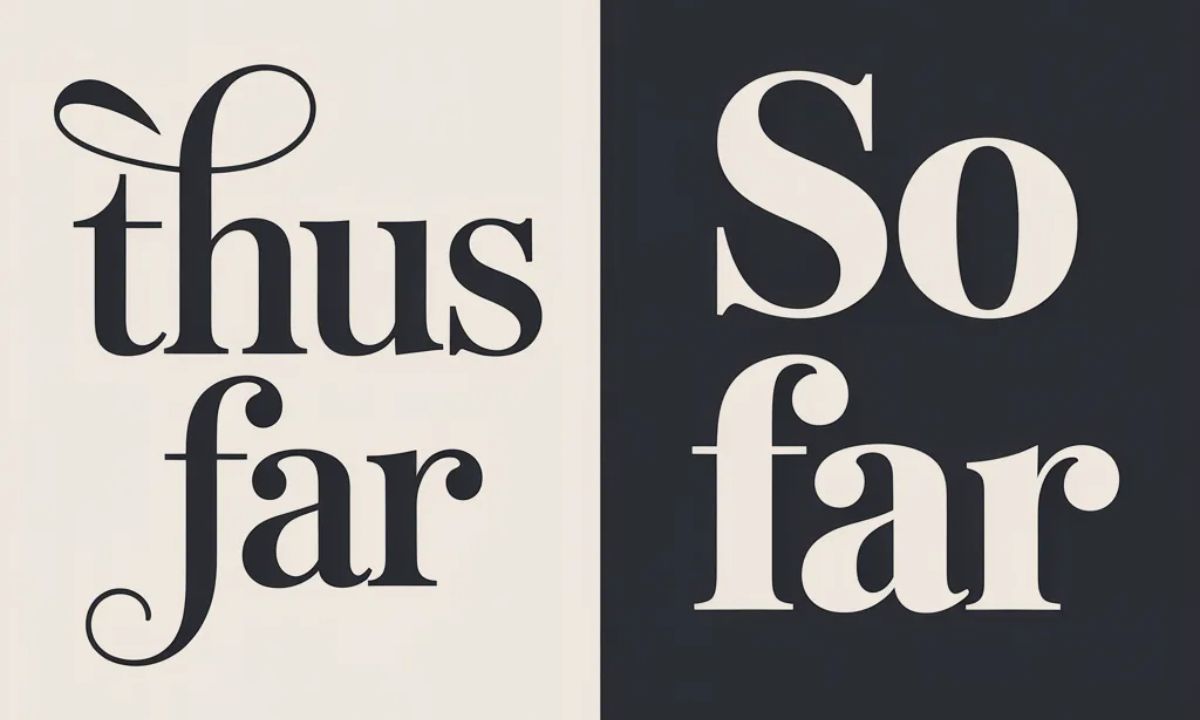
The phrases “thus far” and “so far” are both used to describe something that has happened up to the present moment. Although they have similar meanings, they are used in different tones and situations. “So far” is more common in everyday conversations and informal writing, while “thus far” sounds more formal and is often used in academic, professional, or literary communication.
Understanding the difference between these two expressions helps improve grammar, writing style, and communication skills. Many English learners confuse the phrases because they appear similar in meaning. By learning when and how to use each one correctly, you can sound more natural, confident, and professional in both speaking and writing.
Why This Confuses Even Fluent Speakers
Many fluent English speakers become confused when choosing between “thus far” and “so far” because both phrases have almost the same dictionary meaning. They both describe something happening up to the present moment or until now. However, English is not only about meaning. Tone, style, audience, and context also matter. That is where confusion begins.
The Main Reason for the Confusion
The biggest reason is that both expressions can often replace each other in a sentence without changing the core meaning. For example:
- So far, the results look positive.
- Thus far, the results look positive.
Both sentences are correct. Both mean the same thing. Yet they sound different emotionally and stylistically. Many speakers understand the meaning but struggle to identify which phrase sounds more natural in a certain situation.
Casual vs Formal English
English contains both informal and formal vocabulary. Some words are commonly used in everyday speech while others appear more often in professional or academic writing.
- “So far” belongs to everyday conversational English.
- “Thus far” belongs to formal and polished English.
This difference is easy for native speakers to feel naturally, but it is harder for learners and even fluent speakers to explain clearly.
Why Advanced Learners Still Make Mistakes
Even advanced English users sometimes use “thus far” in casual situations where it sounds too serious or unnatural. For example:
❌ Thus far, my pizza tastes good.
The sentence is grammatically correct, but it sounds overly formal for normal conversation. Most people would naturally say:
✅ So far, my pizza tastes good.
This happens because learners often focus only on grammar and vocabulary instead of tone and social context.
Similar Meaning Creates Overlap
Another reason for confusion is that dictionaries define both expressions almost identically:
- Until now
- Up to this point
- At the present stage
Because the definitions overlap, learners assume they can always use either phrase freely. In reality, the choice depends heavily on writing style and communication setting.
Formal Writing Increases the Confusion
Students and professionals often see “thus far” in:
- Academic essays
- Research papers
- News reports
- Business presentations
- Legal documents
Meanwhile, they hear “so far” in:
- Movies
- Daily conversations
- YouTube videos
- Social media
- Text messages
This exposure creates uncertainty because both forms are correct but belong to different language environments.
Psychological Effect of the Words
The word “thus” sounds more intellectual and traditional because it is older and less common in daily speech. The word “so” sounds simpler and friendlier because people use it constantly in conversation.
As a result:
| Phrase | Feeling/Tone |
| So far | Relaxed, natural, conversational |
| Thus far | Formal, professional, sophisticated |
Many fluent speakers understand this difference instinctively but cannot always explain why one phrase feels better than the other.
Common Situations Where People Get Confused
In Emails
People often wonder whether to sound professional or friendly.
- Casual email → “So far”
- Formal report email → “Thus far”
In Academic Writing
Students sometimes overuse “thus far” because they think formal vocabulary always sounds smarter. However, too much formal language can make writing feel unnatural.
In Business Communication
Managers may use “thus far” in presentations to sound polished, while team chats usually use “so far.”
Key Point to Remember
The confusion is not really about grammar mistakes. It is mostly about:
- Tone
- Formality
- Context
- Audience expectations
That is why even fluent English speakers occasionally hesitate before choosing between the two phrases.
The Core Difference Between “Thus Far” and “So Far”
The core difference between “thus far” and “so far” is not meaning. The real difference is tone, formality, and communication style. Both expressions mean:
- Up to now
- Until this point
- At the present time
However, they create different impressions when used in speech or writing. Understanding this difference helps you sound more natural and appropriate in different situations.
Basic Meaning of Both Phrases
Both phrases describe progress or situations continuing until the current moment.
Examples:
- So far, everything is working well.
- Thus far, everything is working well.
The meaning is identical. The tone is not.
“So Far” = Informal and Conversational
“So far” is common in everyday English. People use it naturally in:
- Casual conversations
- Text messages
- Social media posts
- Friendly emails
- Spoken English
It sounds relaxed and easy to understand.
Examples of “So Far”
- So far, my day has been good.
- The movie is interesting so far.
- So far, we have no problems.
These sentences feel friendly and natural.
“Thus Far” = Formal and Professional
“Thus far” sounds more polished and serious. It is often used in:
- Academic writing
- Business reports
- Professional presentations
- Legal documents
- Formal speeches
It creates a sophisticated and professional tone.
Examples of “Thus Far”
- Thus far, the company has exceeded expectations.
- Thus far, no evidence supports the theory.
- The project has thus far remained successful.
These sentences sound more official and structured.
Tone Comparison
| Phrase | Tone | Common Use |
| So far | Casual and friendly | Daily conversation |
| Thus far | Formal and professional | Academic/business writing |
When Native Speakers Prefer “So Far”
Native English speakers usually choose “so far” because it sounds simpler and more natural in regular communication.
For example:
✅ So far, I like this restaurant.
❌ Thus far, I like this restaurant.
The second sentence sounds overly formal for casual speech.
When “Thus Far” Sounds Better
In serious or professional settings, “thus far” sounds stronger and more polished.
Example in a business report:
✅ Thus far, quarterly profits have increased by 12%.
Using “so far” here would still be correct, but “thus far” sounds more professional.
Important Grammar Note
Grammatically, both expressions work the same way in a sentence. The difference is stylistic rather than grammatical. That means:
- Both are correct English
- Both express time progression
- Both can often replace each other
- The choice depends on tone and audience
Easy Trick to Remember the Difference
Use this simple rule:
- Talking casually → So far
- Writing formally → Thus far
This quick trick helps avoid confusion in most situations.
Why This Confuses Even Fluent Speakers
Even fluent English speakers get confused between “thus far” and “so far” because both expressions carry almost the same meaning. They both refer to something happening from the past until the present moment.
The real challenge is not meaning, but tone and context. Many speakers learn English through exposure, not rules, so they naturally use both phrases without clearly understanding when one sounds more formal than the other. Another reason is that both phrases are grammatically correct in most situations, so there is no obvious “wrong choice.” This overlap creates hesitation, especially in writing, where tone matters more than speech.
The Core Difference Between “Thus Far” and “So Far”
The core difference is simple:
- So far → informal, everyday English
- Thus far → formal, professional English
Both mean “up to now,” but they feel different in style. “So far” is used in conversation, messages, and casual writing. “Thus far” is used in reports, academic writing, and official communication.
Example:
- So far, everything is fine. (casual)
- Thus far, everything has proceeded as planned. (formal)
Meaning stays the same, but tone changes completely.
Historical Origins: How “Thus” and “So” Shaped Their Meanings
The difference also comes from history.
- “Thus” is an older word in English, often used in formal writing, law, and literature. It carried a serious and structured tone.
- “So” developed as a simpler, more conversational word used in everyday speech.
Over time, English naturally split their usage:
- “Thus” stayed in formal contexts
- “So” became part of daily communication
This historical split is why “thus far” still sounds more academic today, while “so far” feels natural and modern.
Tone and Formality: When “Thus Far” Fits Better
Tone is the most important factor.
Use “thus far” when you want to sound:
- Professional
- Academic
- Formal
- Precise
Best situations:
- Research papers
- Business reports
- Official statements
- Presentations
- Legal or structured writing
Example:
- Thus far, the data supports the hypothesis.
If you use “so far” in these cases, it still works grammatically, but it may sound too casual.
Typical Contexts
“So Far” is used in:
- Daily conversations
- Text messages
- Social media
- Informal emails
- Spoken English
Example:
- So far, I like this course.
“Thus Far” is used in:
- Academic writing
- Business communication
- Formal reports
- News articles
- Professional speeches
Example:
- Thus far, no major issues have been reported.
Examples
Using “So Far”
- So far, the weather is nice.
- I haven’t faced any problems so far.
- So far, the project is going well.
- So far, I am happy with the results.
Using “Thus Far”
- Thus far, the investigation has shown no evidence.
- The company has thus far achieved steady growth.
- Thus far, results remain inconclusive.
- The experiment has thus far been successful.
Pro Tip
A simple memory trick:
- If you are talking or texting → use “so far”
- If you are writing formally → use “thus far”
Another quick test:
If the sentence sounds too serious in a casual situation, replace “thus far” with “so far.”
Synonyms of “Thus Far / So Far”
These can replace both expressions depending on tone:
- Up to now
- Until now
- To date
- As of now
- At this point
- Up to this point
- Hitherto (very formal)
- Thus up to now (rare/formal)
Examples:
- Up to now, everything is fine.
- To date, no issues have been found.
FAQs
What is the meaning of “thus far”?
It means up to this point in time, used mainly in formal writing or speech.
What is the meaning of “so far”?
It means until now, commonly used in everyday conversation.
Are “thus far” and “so far” the same?
Yes, they have the same meaning, but different tone and formality.
Which is more common?
“So far” is more common in spoken and informal English.
Can I use “thus far” in daily conversation?
Yes, but it may sound too formal or unnatural in casual speech.
Is “thus far” correct grammar?
Yes, it is grammatically correct and widely used in formal English.
What is a better alternative to both?
“Up to now” or “until now” can be used in neutral situations.
Conclusion
Both “thus far” and “so far” mean the same thing: up to now or until this point in time. The real difference is not meaning but tone and formality. “So far” is simple, natural, and widely used in everyday speech, while “thus far” sounds more formal, polished, and is often used in academic, business, or official writing.
Understanding this difference helps you choose the right phrase based on your audience and situation. If you want your English to sound natural in daily conversation, “so far” is the best choice. If you need a more professional or formal tone, “thus far” works better. Mastering this small distinction improves your writing clarity, fluency, and overall communication style.