One of the most common English grammar mistakes people make is confusing “less then” and “less than.” These two phrases look similar, but only one is correct in English grammar.
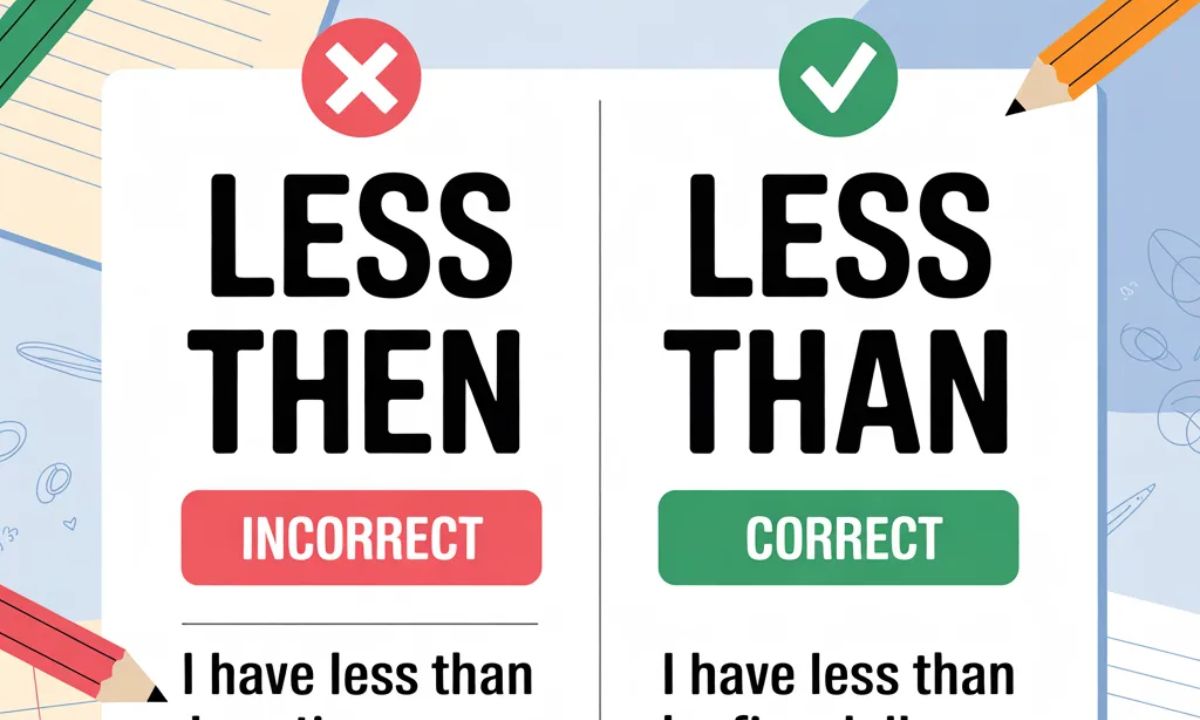
The correct phrase is “less than.” The incorrect version is “less then.”
This confusion happens because “then” and “than” sound similar, but they have completely different meanings and uses. In this guide, you will learn the difference in a simple way, along with rules, examples, and practical usage tips.
Less Then (Incorrect Usage)
Let’s first understand the incorrect form: less then
The phrase less then is grammatically wrong in English. It is often used by mistake when people confuse “then” with “than.”
Why “Less Then” is Wrong
The word “then” is used to talk about:
- Time (past or future order)
- Sequence of events
- “After that” situations
It does NOT show comparison.
Example of Incorrect Usage:
- ❌ I have less then 10 dollars.
This sentence is wrong because it is trying to compare amounts, not talk about time.
Correct Version:
- ✔ I have less than 10 dollars.
Less Than (Correct Usage)
The correct phrase is less than, and it is widely used in English grammar.
The word “than” is used to compare:
- Numbers
- Quantities
- Sizes
- Amounts
- Values
Simple Definition:
Less than means “a smaller amount compared to something else.”
Examples of Less Than in Sentences
Here are simple and clear examples:
- I have less than 5 apples.
- She is less than 18 years old.
- This bag weighs less than 2 kilograms.
- The temperature is less than 10°C.
- He earns less than his brother.
In all these examples, comparison is happening, which is why less than is correct.
Difference Between Less Then and Less Than
Here is a simple comparison table:
| Feature | Less Then | Less Than |
| Correct or Incorrect | ❌ Incorrect | ✔ Correct |
| Meaning | Time/sequence (wrong usage here) | Comparison |
| Grammar use | Not used in comparisons | Used in comparisons |
| Example | I have less then 10 rupees (wrong) | I have less than 10 rupees (correct) |
Why Do People Get Confused?
Many learners confuse then vs than because:
1. Similar pronunciation
Both words sound almost the same when spoken quickly.
2. Typing mistakes
People often type quickly on mobile and auto-correct does not always fix it.
3. Lack of grammar awareness
Beginners may not know that both words have different meanings.
4. Informal communication habits
On WhatsApp, Instagram, or TikTok, grammar is often ignored.
Easy Trick to Remember the Difference
Here is a simple memory trick:
👉 “Than = Comparison”
- bigger than
- smaller than
- less than
👉 “Then = Time”
- first this, then that
- back then
- and then
So:
- If you are comparing → use than
- If you are talking about time → use then
Real-Life Usage of Less Than
The phrase less than is used in many real-life situations:
1. Mathematics
- 7 is less than 10
2. Age comparison
- She is less than 20 years old
3. Money comparison
- I spent less than $50
4. Time duration
- The movie is less than 2 hours long
5. Measurements
- The room is less than 10 feet wide
Which Is Used the Most?
Between the two phrases, “less than” is used the most because it is correct English grammar.
Search engines, academic writing, exams, business communication, and everyday speech all use less than.
On the other hand, “less then” is rarely used correctly because it is considered a grammatical mistake.
Is “Less Then” Ever Acceptable?
In standard English grammar, no, “less then” is not acceptable.
However, you might see it:
- In casual texting
- On social media posts
- As a typing error
Even then, it is still incorrect.
Common Mistakes with Than and Then
People often confuse these words in other phrases too:
Incorrect → Correct
- More then → More than ✔
- Less then → Less than ✔
- Better then → Better than ✔
This shows that “than” is always used for comparisons.
Difference Between “Less Then” and “Less Than”
Here is a clear and simple comparison table to help you understand the difference:
| Feature | Less Then ❌ | Less Than ✔ |
| Correct or Incorrect | Incorrect English | Correct English |
| Grammar Usage | Not used in comparisons | Used for comparisons |
| Word Type | “Then” = time/sequence word | “Than” = comparison word |
| Meaning | Refers to time order (but wrong here) | Shows smaller amount or comparison |
| Example | I have less then 10 rupees ❌ | I have less than 10 rupees ✔ |
| Usage in Writing | Not standard or accepted | Standard in all English writing |
| Common Usage | Rare, usually a mistake | Very common in everyday English |
| Formal Writing | Not allowed | Fully accepted |
Key Takeaway:
- “Less than” = correct (comparison) ✔
- “Less then” = incorrect (grammar mistake) ❌
Why “Less Than” is Important in Writing
Using correct grammar like less than is important because:
- It improves writing clarity
- It makes communication professional
- It helps in exams and academic writing
- It improves SEO content quality
- It avoids misunderstanding
If you are writing blogs, assignments, or professional emails, always use less than correctly.
Daily Life Examples of “Less Than” and “Less Then”
In everyday English, people often use “less than” in real conversations. The incorrect form “less then” sometimes appears by mistake, but it is not grammatically correct. Below are simple daily life examples to help you understand how less than is used properly.
1. Money / Shopping
- I have less than 100 rupees in my wallet.
- This shirt costs less than 500 rupees.
- She spent less than her budget at the market.
2. Age
- My brother is less than 18 years old.
- You must be less than 25 to apply for this job.
- The child is less than 5 years old.
3. Time
- The movie is less than 2 hours long.
- I finished my homework in less than 30 minutes.
- The meeting will take less than an hour.
4. Weight / Measurement
- This bag weighs less than 3 kilograms.
- The box is less than 1 meter tall.
- The distance is less than 10 kilometers.
5. Study / Exams
- I scored less than 50 marks in math.
- You need less than 60% to pass this test.
- He completed less than half of the paper.
6. Daily Situations
- There are less than 10 people in the room.
- I slept for less than 6 hours last night.
- We have less than 5 minutes left.
❌ Incorrect Daily Life Examples (Less Then)
These are common mistakes people make:
- I have less then 100 rupees ❌
- She is less then 18 years old ❌
- The bag weighs less then 5 kg ❌
- The movie is less then 2 hours ❌
👉 All of these are wrong because “then” shows time, not comparison.
✔ Simple Rule to Remember
- Less than = comparison (correct)
- Less then = time (wrong in this context)
Voice Search Friendly Answer
If someone asks:
👉 “Which is correct, less then or less than?”
The correct answer is: less than is correct, less then is wrong.
Final Thoughts
The confusion between less then or less than is very common, but the rule is simple:
✔ Less than = correct (comparison)
❌ Less then = incorrect (wrong usage)
Once you understand the difference between “then” and “than,” you will never make this mistake again.
Always remember:
- Than = comparison
- Then = time
Using the correct form will improve your English writing, make your communication clearer, and help you avoid grammar mistakes in exams, social media, and professional work.
FAQs
What is the correct phrase, Less Then or Less Than?
The correct phrase is less than. “Less then” is grammatically incorrect.
Why is Less Than wrong in English grammar?
It is NOT wrong. In fact, less than is correct, while less then is wrong because “then” refers to time, not comparison.
How do I use Less Than in a sentence?
You can use it to compare numbers or amounts:
- I have less than 10 rupees.
- She is less than 18 years old.
Is Less Than used more often than Less Then?
Yes, less than is used far more often because it is the correct grammatical form.
Can I use Less Then in informal writing or messages?
No, even in informal writing, the correct form is less than. “Less then” is always considered a mistake.