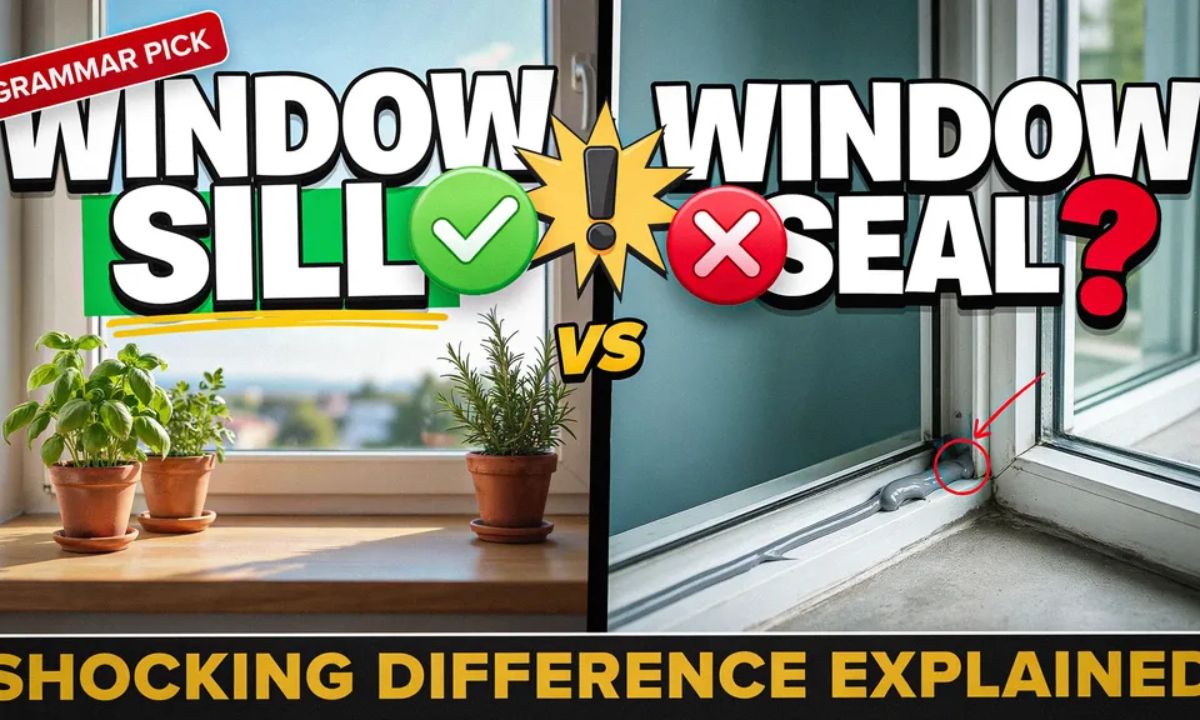
Many people feel confused when they hear the terms windowsill or window seal because both words sound similar. However, they have completely different meanings. A windowsill is the flat ledge or shelf located at the bottom of a window. In contrast, a window seal usually refers to the material or barrier that blocks air, water, dust, and moisture from entering through the edges of a window. Therefore, using the correct term is important in home improvement, interior design, and everyday conversation.
Moreover, people often mix up these words because “seal” and “sill” sound alike when spoken quickly. As a result, many homeowners, writers, and English learners search for phrases like difference between windowsill and window seal, windowsill meaning, window seal definition, and window parts explained. Understanding these terms can help you communicate clearly when discussing window repairs, cleaning, decorating, or construction projects.
In this guide, you will learn the real difference between windowsill or window seal with simple explanations, practical examples, and easy grammar tips. Additionally, we will explore related terms like window frame, window ledge, window insulation, window trim, and weather seal so you can confidently use the correct word in any situation.
Why “Window Seal” and “Window Sill” Are Commonly Confused
Many people confuse window seal and window sill because the words sound very similar when spoken aloud. In fast conversations, “seal” and “sill” may seem almost identical. As a result, homeowners, DIY beginners, and English learners often use the wrong term without realizing it.
Another reason for the confusion is that both parts belong to the same window structure. Since they are connected to windows, people sometimes assume they describe the same thing. However, they have completely different functions. A window seal helps block air and moisture while a window sill supports the window and adds structure and style.
Additionally, online searches and casual speech sometimes mix the terms incorrectly. Therefore, learning the exact meaning of each word helps you communicate more clearly during home repairs, construction work, or interior decorating discussions.
What Is a Window Seal? Definition and Purpose
A window seal is the protective barrier around a window that prevents outside air, moisture, dust, and water from entering your home. It creates a tight connection between the glass, frame, and surrounding materials. Window seals are important because they improve insulation and help maintain indoor temperature.
In modern homes, window seals are especially important for energy efficiency. A damaged or broken seal can allow cold air, heat, or moisture to enter the room. Consequently, this may increase energy bills and reduce indoor comfort.
Window seals also help reduce noise and protect windows from water damage. Without a proper seal, condensation can build up between window panes which may lead to foggy glass or mold growth. Therefore, keeping window seals in good condition is essential for both comfort and home maintenance.
How a Window Seal Works
A window seal works by closing small gaps around the edges of the window. These gaps may appear between the glass panes, the frame, or the wall. The seal acts like a protective shield that blocks unwanted air and moisture from passing through.
Most window seals use rubber, silicone, foam, or special insulating materials. When installed properly, the seal creates an airtight and watertight barrier. As a result, indoor temperatures stay stable and the heating or cooling system works more efficiently.
In double-pane or triple-pane windows, seals also trap insulating gas between the glass layers. This gas improves thermal insulation and keeps the home more energy efficient. However, if the seal breaks, the gas may escape and moisture can enter between the panes.
Common Types of Window Seals
There are several common types of window seals used in homes and buildings. Each type serves a different purpose depending on the window design and climate conditions.
Rubber Window Seals
Rubber seals are flexible and durable. They are commonly used around window frames to block air and water leaks.
Silicone Seals
Silicone seals provide strong waterproof protection. Builders often use them in areas exposed to rain and moisture because silicone resists cracking and weather damage.
Foam Seals
Foam seals are soft insulating strips placed around windows to stop drafts. They are affordable and easy to install in residential homes.
Glazing Seals
Glazing seals hold the window glass securely inside the frame. They also help improve insulation and reduce vibration.
Weather Stripping
Weather stripping is a movable seal placed around opening windows. It prevents air leaks while allowing the window to open and close smoothly.
What Is a Window Sill? Definition and Structure
A window sill is the flat horizontal surface located at the bottom of a window frame. It can be found inside or outside the building depending on the design. The sill supports the window structure and helps direct water away from the wall.
Inside the home, the window sill often acts like a small shelf where people place plants, books, candles, or decorations. Outside the building, the sill protects the wall from rainwater by guiding water away from the window opening.
Window sills are usually made from wood, stone, vinyl, metal, or concrete. Their design may vary depending on the architectural style of the house. Besides providing support, window sills also improve the appearance of windows and add decorative value.
Functions of a Window Sill
A window sill performs several important functions in a home or building. First, it provides structural support for the window frame. This helps keep the window stable and secure over time.
Second, the sill helps control rainwater. Exterior window sills are slightly angled so water can flow away from the building instead of collecting near the wall. This reduces the risk of water damage and mold growth.
Additionally, interior window sills offer practical and decorative benefits. Many homeowners use them for displaying plants, photo frames, or decorative items. Therefore, window sills combine both functionality and style in modern home design.
Common Materials Used for Window Sills
Window sills are made from different materials based on durability, appearance, and budget. Each material offers unique advantages.
Wooden Window Sills
Wooden sills create a warm and classic appearance. They are popular in traditional homes but require regular maintenance to prevent moisture damage.
Stone Window Sills
Stone sills are strong, durable, and elegant. Materials like marble and granite provide a premium look and resist weather damage effectively.
Vinyl Window Sills
Vinyl sills are affordable and low maintenance. They resist moisture and are commonly used in modern residential homes.
Metal Window Sills
Metal sills are durable and weather-resistant. Aluminum is a popular choice because it is lightweight and long-lasting.
Concrete Window Sills
Concrete sills are highly durable and often used in commercial buildings or modern architecture. They can handle heavy weather conditions effectively.
Window Seal vs Window Sill: Side-by-Side Comparison
Although window seal and window sill are connected to the same window system, they serve completely different purposes. A window seal focuses on insulation and protection while a window sill provides support and structure.
A window seal is usually made from flexible materials like rubber, silicone, or foam. It blocks air, water, and moisture from entering the home. In contrast, a window sill is a solid surface made from wood, stone, vinyl, or metal that supports the window and improves appearance.
Another major difference is location. Window seals are hidden around the edges of the glass or frame while window sills are clearly visible at the bottom of the window. Therefore, understanding the difference between the two helps avoid confusion during repairs, construction projects, or home improvement discussions.
Conclusion
Understanding the difference between windowsill or window seal is important because both parts serve completely different purposes in a window system. A window seal protects your home from air leaks, moisture, dust, and temperature changes. Meanwhile, a window sill provides structural support and adds both practical and decorative value to the window area.
Although the two terms sound similar, they should not be used interchangeably. Knowing the correct meaning can help you communicate clearly during home repairs, construction projects, or interior design discussions. In addition, understanding these window components can help homeowners maintain better insulation, improve energy efficiency, and protect their property from water damage.
FAQs
What is the main difference between a window seal and a window sill?
A window seal blocks air and moisture around the window while a window sill is the flat bottom surface that supports the window structure.
Is it called a window seal or windowsill?
Both terms are correct but they refer to different parts of a window. A window seal protects against leaks while a windowsill supports the window.
What does a window seal do?
A window seal creates an airtight and watertight barrier around the window to improve insulation and prevent moisture from entering.
What is a window sill used for?
A window sill supports the window frame and helps direct rainwater away from the wall. Interior sills can also hold decorative items.
What are common signs of a broken window seal?
Foggy glass, condensation between panes, drafts, and higher energy bills are common signs of a damaged window seal.
Which materials are commonly used for window sills?
Common materials include wood, stone, vinyl, metal, and concrete.
Can a damaged window seal be repaired?
Yes. In many cases, professionals can replace or repair damaged seals to restore insulation and energy efficiency.
Why do people confuse window seal and window sill?
People often confuse the terms because the words sound similar and both are connected to the window structure.